Things to do
Hohenburg ruins
& Vauban fortress
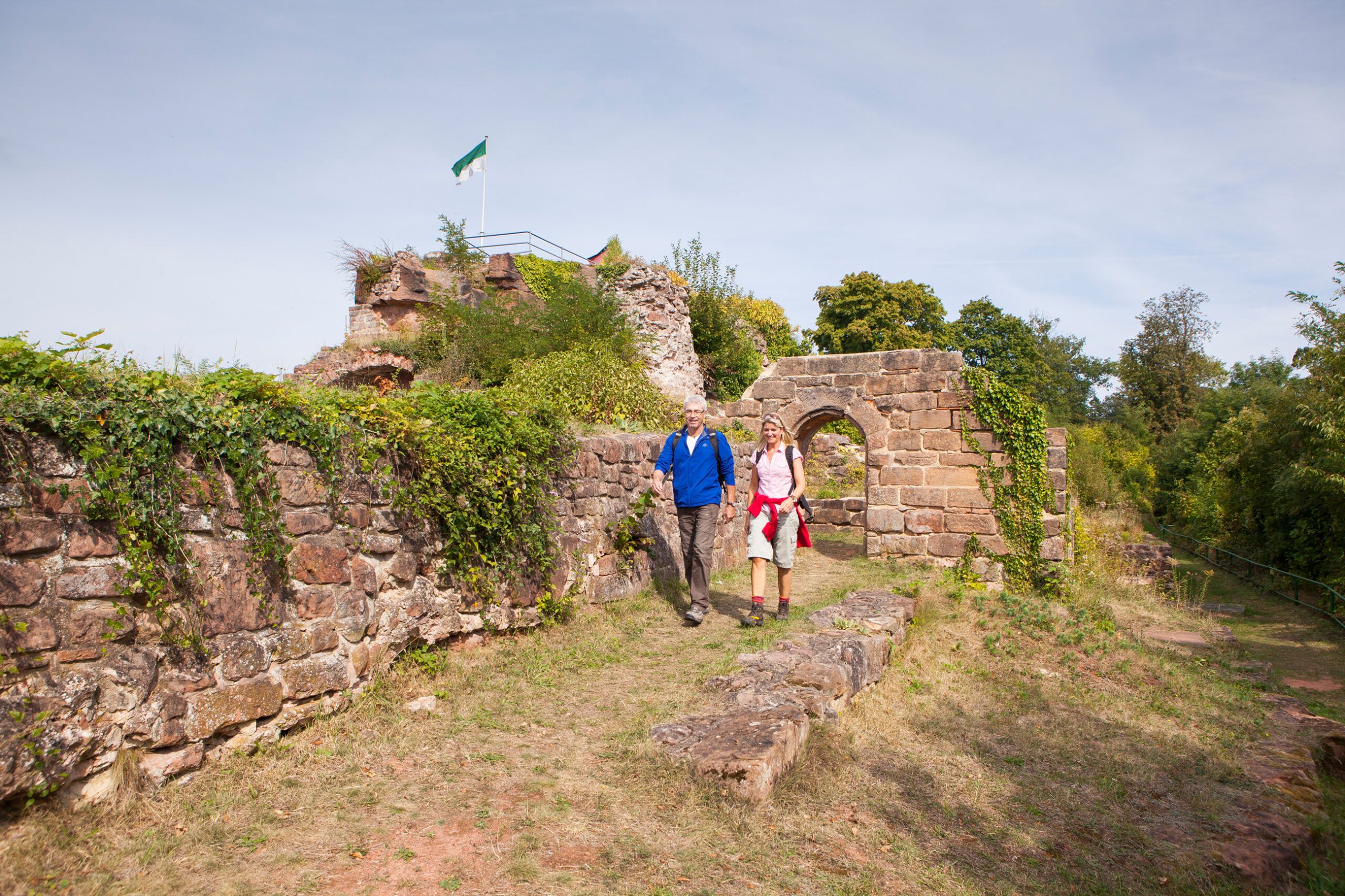
The Hohenburg castle ruins on the Schlossberg in Homburg were the seat of the Counts of Homburg, later a Renaissance palace and, from 1679, a fortress built to plans by Vauban. The excavated remains, around 230 m long, are free to visit at any time and lie about 3 minutes’ walk from Schlossberg Hotel.
At a glance
- Also known as
- Festung Homburg, Burg Homburg, Vauban fortress
- Periods
- Counts’ castle (12th–15th c.), Renaissance palace (from the late 16th c.), fortress (from 1679)
- Site
- approx. 230 m long, 50–70 m wide
- Admission
- free, open at all times
- From the hotel
- approx. 3 min on foot (240 m)
- Excavated
- since 1981
- Audio tour
- Lauschtour app, “Homburger Festungsrundgang”, also in sign language
History
Castle, palace,
fortress
The town of Homburg takes its name from the castle on the Schlossberg. Its history in dates:
- 1146
A Count of Homburg is mentioned in a document for the first time. From the 12th to the 15th century the Hohenburg is the seat of the Counts of Homburg. The Literaturland Saar portal, by contrast, dates the first mention of the name “Homberc” to 1180.
- 1330
Emperor Louis IV, known as “the Bavarian”, grants town rights to the settlement at the foot of the castle.
- 1449
After the death of the last count, Homburg passes to Nassau-Saarbrücken.
- 1588
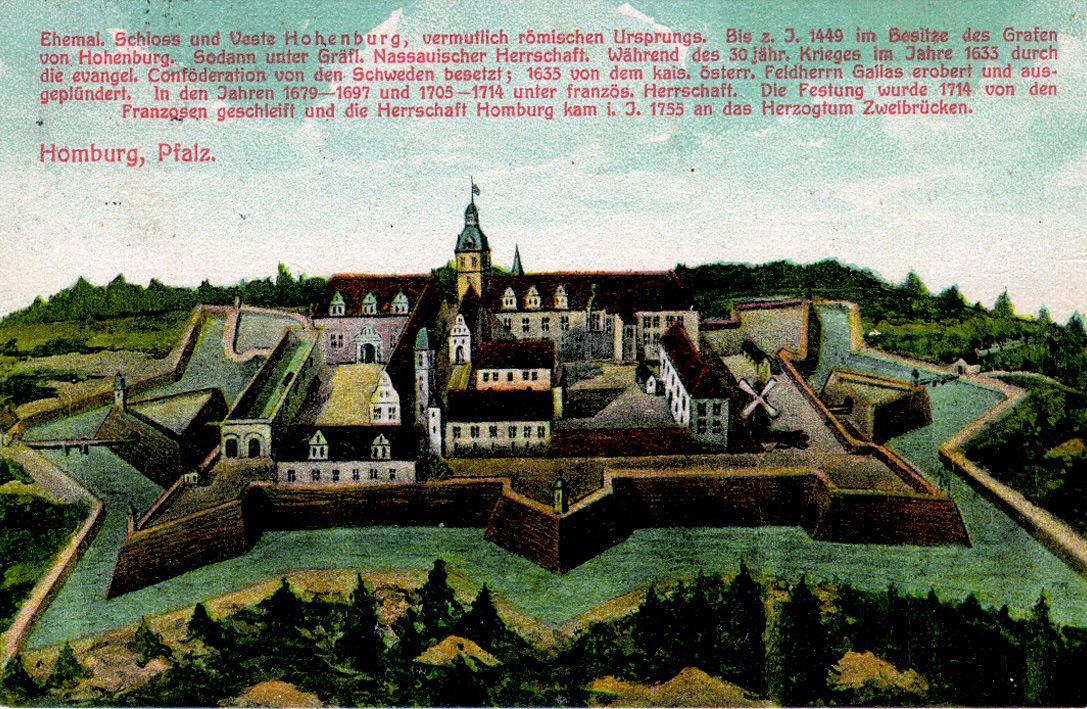
In the second half of the 16th century the castle is rebuilt as a Renaissance palace with bastions; the work is largely complete by 1588.
- 1679
Louis XIV captures Homburg. The town and fortress are extended to plans by Sébastien de Vauban: the site more than doubles in size and the town is walled for the first time.
- 1697
The fortifications are razed for the first time.
- 1714
The fortress is razed for good.
- 1755
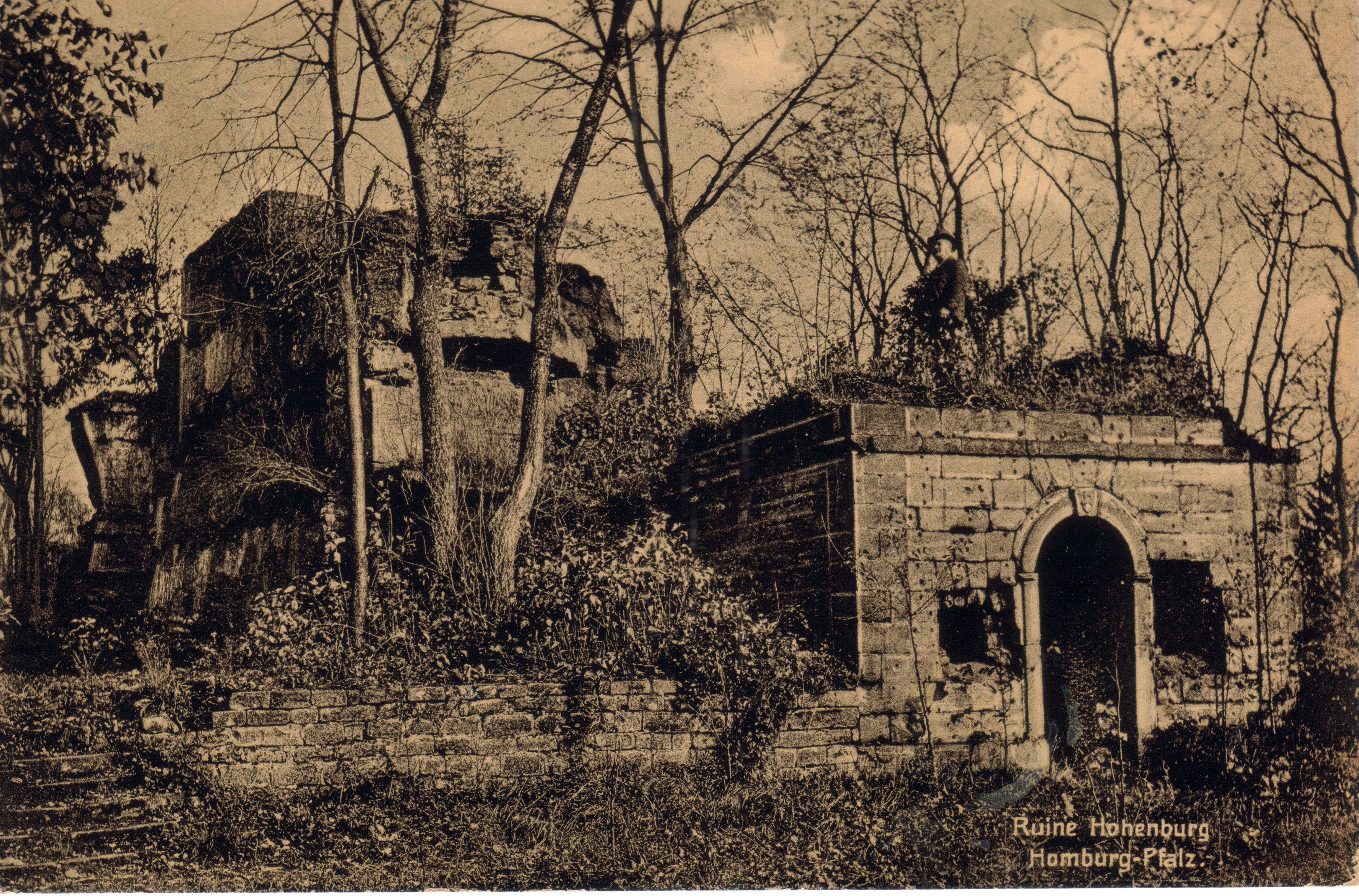
Homburg passes to Palatinate-Zweibrücken. The ruins are later used as a quarry for building Karlsberg Palace.
- 1981
Excavation and conservation begin. Most of the visible remains date from the fortress period.
- 2010
Homburg joins the network of fortified towns of the Greater Region, certified by the Council of Europe as a Cultural Route since 2016.
On site
What you can
see today
The site on the top of the Schlossberg is around 230 m long and 50 to 70 m wide. You can see foundations, passages and sections of wall, the rampart and ditch, a well, stairs, casemates and the piers of the former drawbridge.
From the viewing platform you look out over Homburg and the surrounding countryside. The way up involves steps and low walls.
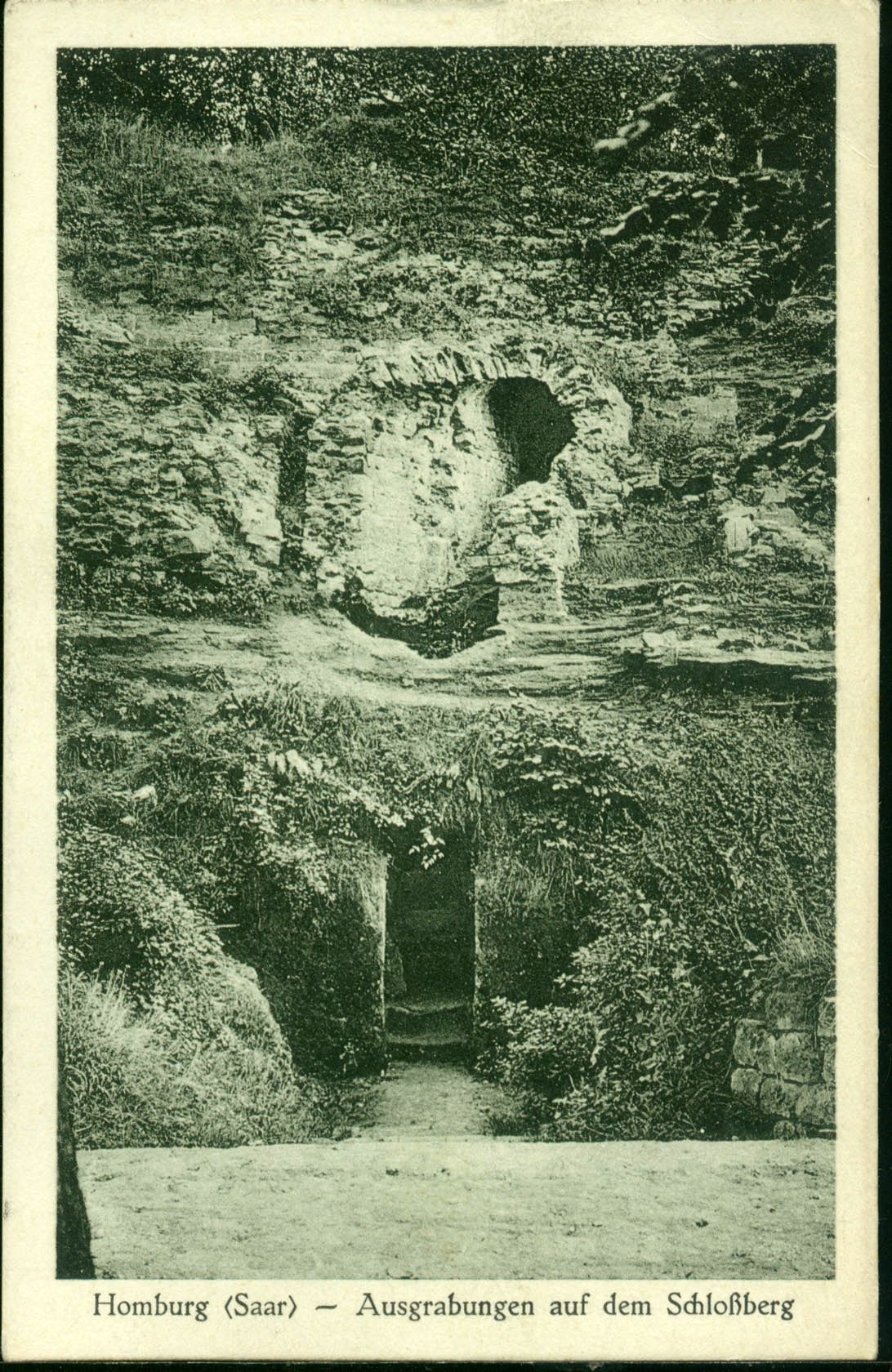
Beneath the hill lie the Schlossberg caves (Schlossberghöhlen). Whether their first passages once served to defend the castle is uncertain.
Walks
From the hotel
to the fortress
It is 240 m from the hotel, about 3 minutes on foot; the ruins lie around 17 m higher. Opposite the fortress, at the large wooden cross, is the start of the Schlossberg-Tour premium hiking trail.
For a short loop, try the Hohenburg walk (Spazierweg Hohenburg) from Saarpfalz-Touristik: 2.94 km, about 50 minutes, 45 m of ascent and descent, starting at the Vauban fortress car park. Saarpfalz-Touristik lists Schlossberg Hotel as a place to stop along the way.
The Lauschtour app offers a GPS-guided audio tour, the “Homburger Festungsrundgang”, also in sign language; it too starts at the Vauban fortress car park. For guided tours of the Schlossberg run by the town, contact the Homburg tourist information office on +49 6841 101820.
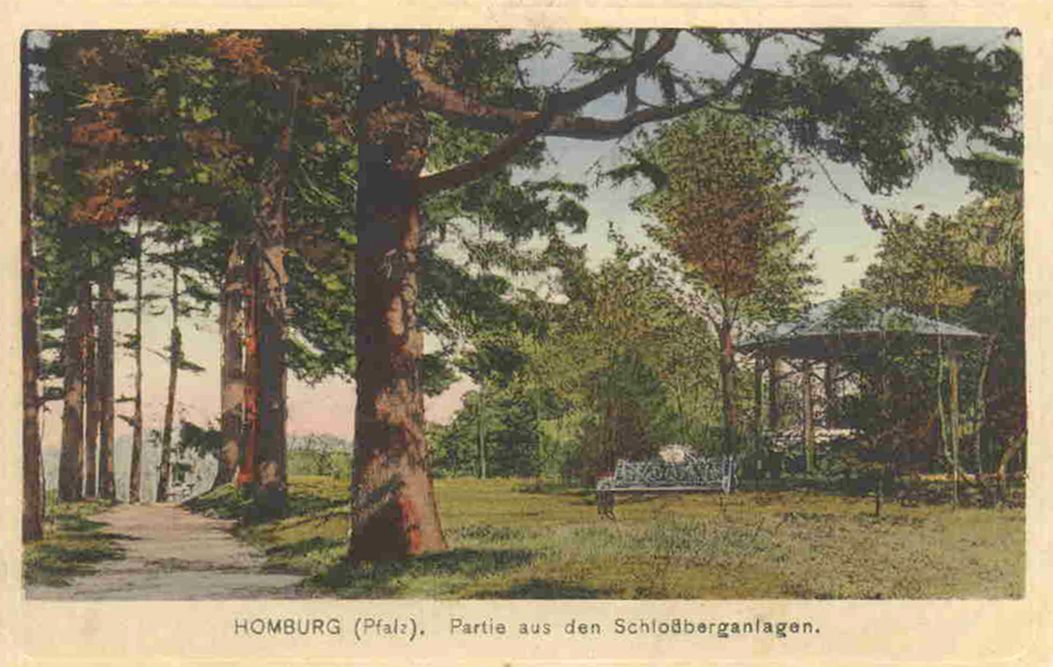
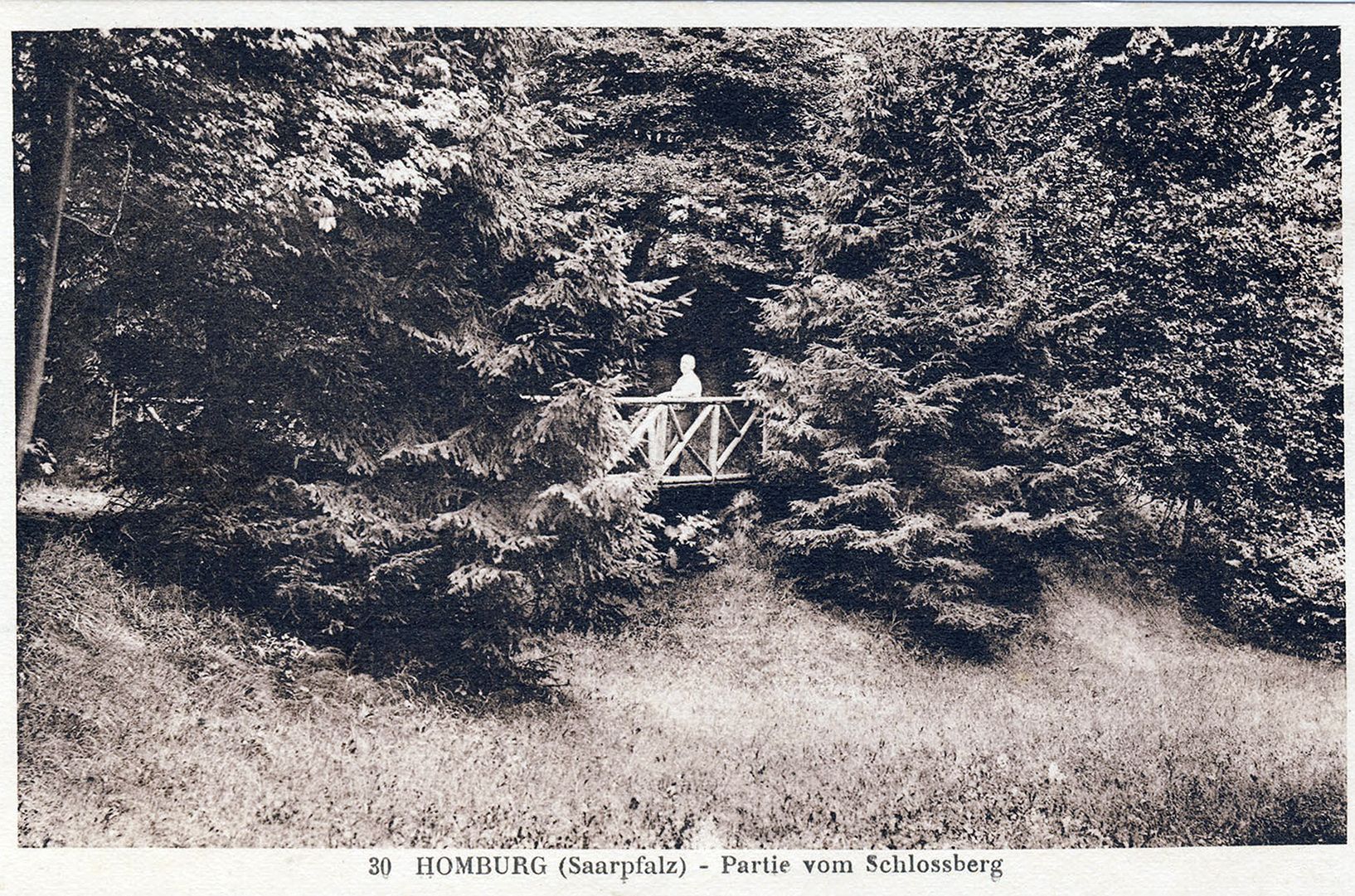
Historical
views
FAQ
Frequently asked
questions
Is there an admission charge for the Hohenburg ruins?
No. The site is free to visit and open at all times.
How far are the ruins from Schlossberg Hotel?
240 m, about 3 minutes on foot. The ruins lie around 17 m higher than the hotel.
Who built the fortress at Homburg?
The castle was the seat of the Counts of Homburg from the 12th to the 15th century and was rebuilt as a Renaissance palace in the 16th century. After Louis XIV captured Homburg in 1679, the town and fortress were extended to plans by Sébastien de Vauban. The fortress was razed in 1697 and 1714.
Are there guided tours?
The Lauschtour app offers an audio tour (“Homburger Festungsrundgang”), also in sign language. For guided tours run by the town, contact the Homburg tourist information office on +49 6841 101820.